Create accessible, unambiguous and genuinely useful content. Established SEO foundations still matter. A special file, schema or writing trick cannot guarantee an AI recommendation. Crawler access is different from indexing, training or being cited in an answer.
Three terms, not three miracle tools
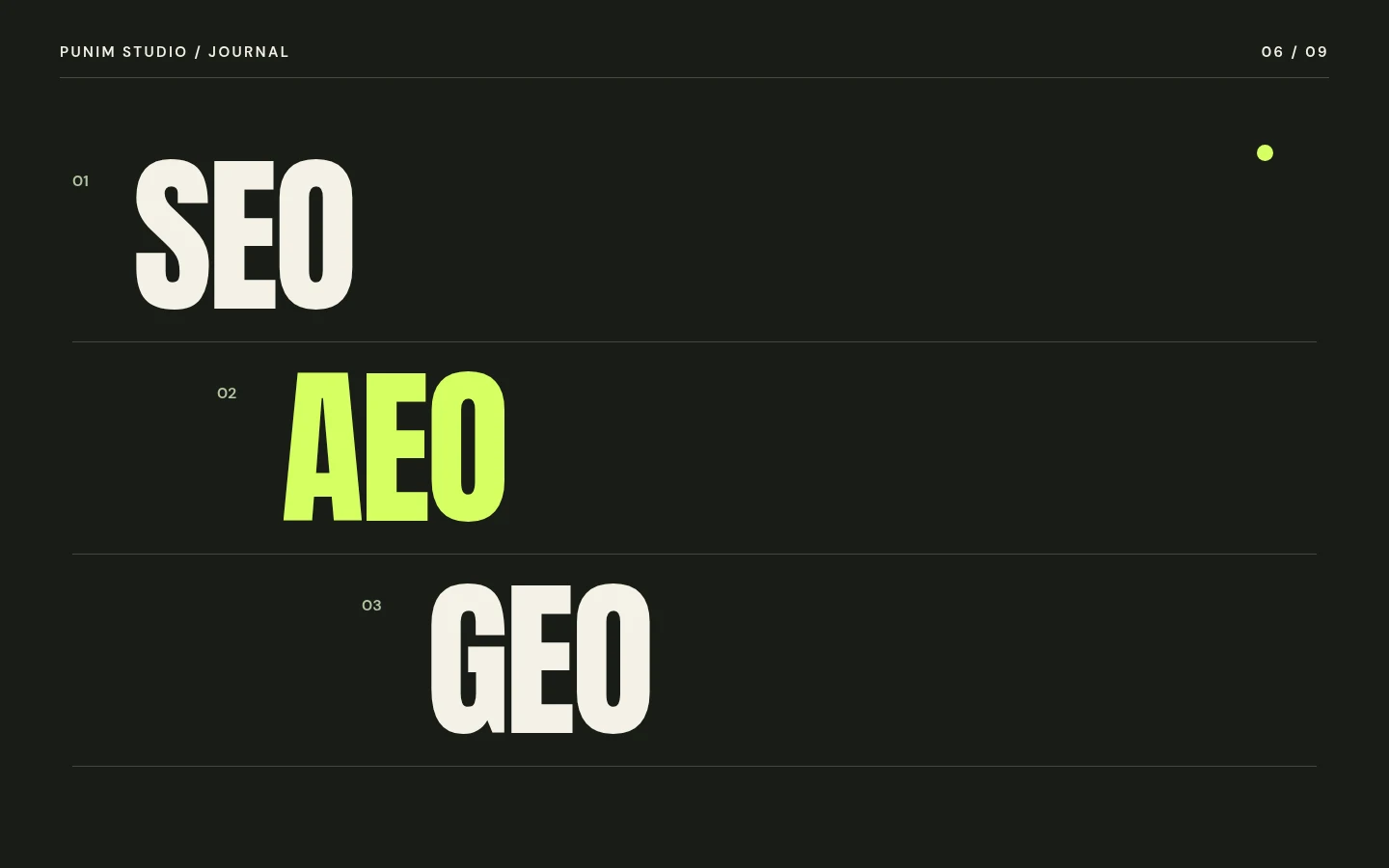
SEO means search engine optimisation and includes technology, content and clear structure. AEO commonly means Answer Engine Optimization: content should answer questions well. GEO often means Generative Engine Optimization and focuses on generated answers. These terms do not have uniformly defined boundaries. Discuss concrete tasks rather than selling new abbreviations. For a company website, the practical work is to explain the offer clearly, answer real questions and provide information that people and systems can understand.
Accessibility comes before optimisation promises
Important content should be available as accessible text rather than only in images or behind complicated interactions. Clear navigation, working URLs and appropriate status codes form the foundation. Robots rules and hosting protections can affect access. Review them deliberately rather than removing every restriction by default. Some operators want to exclude certain uses. Different providers and crawlers have different roles; allowing access does not automatically cause inclusion or use. For specific settings, consult the relevant provider’s current official documentation.
Write answers with clear context
A useful page answers a specific question first, then explains the conditions. For example, state not only a starting price but also the scope it refers to. Distinguish facts, examples and opinions. Organise longer explanations under meaningful headings. Do not force a keyword into every paragraph. Information that people understand is a better foundation than copy written purely as search-engine bait. You remain responsible for accuracy: review claims before publishing and correct outdated information when your offer or its conditions change.
Evidence instead of invented authority
Invented client counts, reviews and success rates do not make content reliable. Show real work with accurate context and identify independent design studies as such. Provide traceable sources for specialist claims where needed. Clear authorship and an identifiable contact help readers without guaranteeing an AI mention. Structured data can supplement this information in machine-readable form, but must match visible content. It is not a hidden channel for claims unsupported on the website. Even elaborate schema cannot replace substantive expertise.
What special files cannot do
New files and formats are frequently discussed around AI visibility. Support and use differ by provider and may change. No such file should be sold as a guaranteed route into ChatGPT or Google AI. Google’s published search guidelines and technical requirements remain the relevant reference for its systems. Other systems have their own documentation. Before commissioning additional measures, ask about their specific purpose, demonstrated support and ongoing maintenance. An experimental addition should remain clearly identified as an experiment.
One prompt does not prove success
One answer to one question is not a robust measurement of visibility. Responses can vary by system, time and context. Source presentation is not consistent everywhere either. Record specific observations without turning them into a general recommendation claim. Continue checking search data, technical access and the quality of real enquiries. Measurement tools need appropriate costs, limitations and privacy arrangements. Claims such as “guaranteed AI recommendation” do not belong in sound planning. Prefer verifiable tasks and honest explanations of remaining uncertainties.
A sensible starting point for small businesses
Begin with your main services and their most common questions. Explain prices or pricing factors, describe the process and keep business details current. Check mobile readability and access without technical obstacles. Connect related content through internal links so answers do not stand alone. This work helps visitors whether or not an AI system later mentions the page. If you want to go further, plan a technical and editorial assessment. It creates concrete priorities instead of a collection of fashionable measures without a clear benefit.
Ask providers the right questions
For an AI-visibility proposal, ask about the actual changes to your website. Which problems will be fixed? Which providers demonstrably support the proposed measure? How is success defined, and what limitations remain? Promises and abbreviations alone do not provide a sound basis. A serious plan describes the work, assumptions and open questions. Afterwards, you should understand what changed and why it benefits visitors. Ask for this explanation in ordinary language and keep it with your project records rather than relying on an impressive demonstration of a single generated answer.