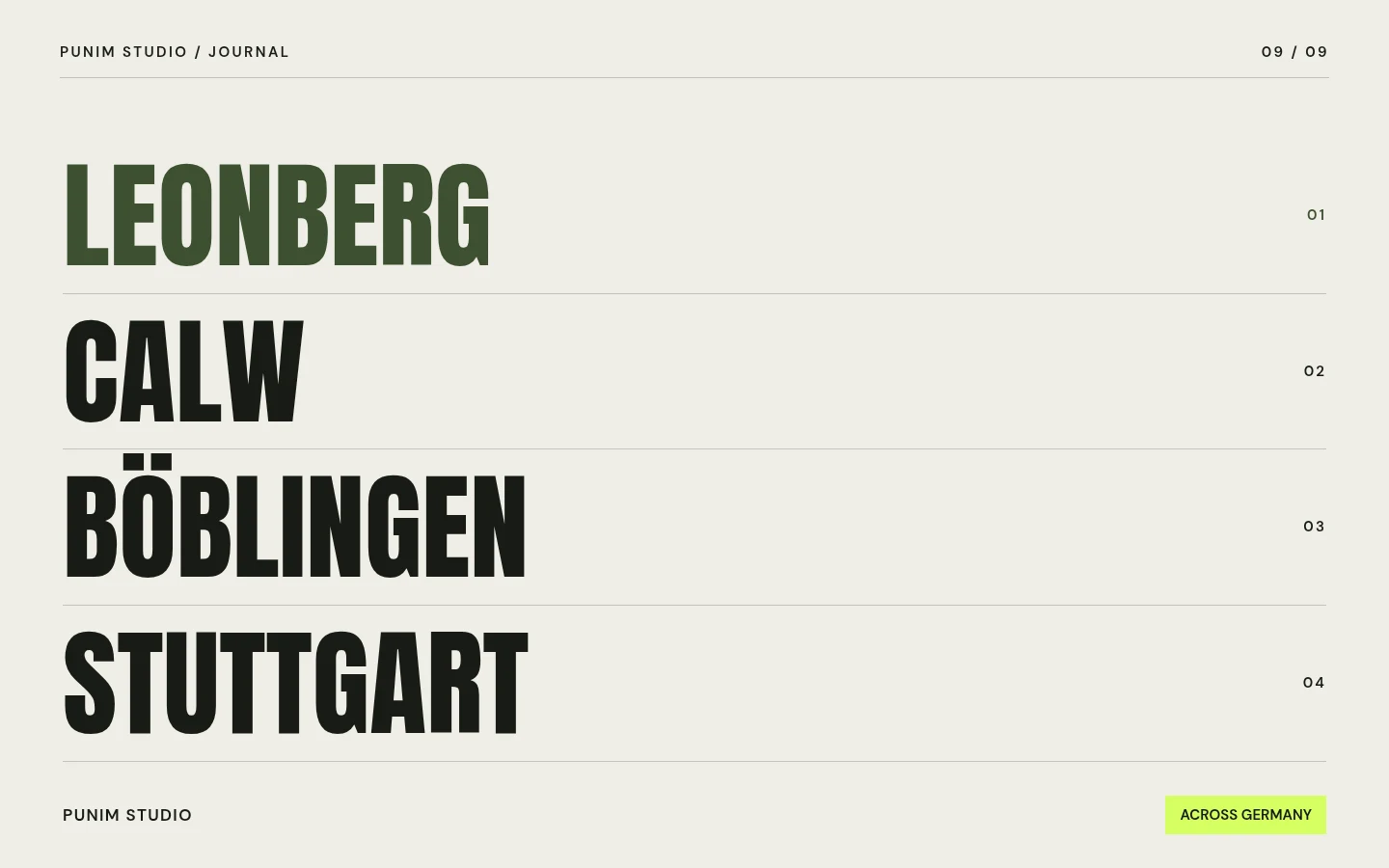
Dedicated information pages cover Leonberg, Calw, Böblingen and Stuttgart. They describe regional service, not additional office locations. Nationwide collaboration can be coordinated digitally; scope, timing and services are agreed individually.
Connection is more than an address
Regional connection can help with initial orientation. A good project still depends on understanding the offer, audience and working methods, not distance alone. What matters is whether questions are answered clearly and decisions remain understandable. A local information page should explain what support is actually offered. It must not imply an address or office that does not exist. Clear scope, a realistic process and honest examples are often more useful when choosing a partner than the shortest distance on a map.
Leonberg as a regional starting point
The Leonberg web-design page explains the regional context and links to services, prices and contact. People nearby should quickly understand what kind of website is possible and how an enquiry starts. Location should not simply be repeated as a keyword. Useful information about collaboration and services is what matters. A local presence can also be understandable beyond its region. This combination is especially useful for businesses with customers elsewhere: state the connection clearly without artificially limiting the offer.
Put Calw, Böblingen and Stuttgart in context
Regional pages for Calw, Böblingen and Stuttgart complement the overview. They remain separate entry points and are not replaced by the journal. Follow the appropriate links when looking for information about those places. The presentation describes potential service, not offices in every town. The same applies to your own website: a service area and a business location are different facts. Regional pages should answer real questions and connect to the main services. Large numbers of interchangeable town pages are not a prerequisite for regional visibility.
Nationwide projects need clear digital coordination
Website projects can often be organised without regular in-person meetings. That requires a main contact, prepared content and clear approvals. Agree how files are shared and how feedback is collected. One traceable project state is more useful than scattered messages containing conflicting change requests. Timing and communication routes should fit the project. Digital collaboration does not automatically mean every service can be delivered remotely. Photography or specific on-site work should be discussed separately and planned realistically.
The process starts with your offer
First establish what the business offers and what the website needs to achieve. Structure, content and design can then be aligned. The configurator can show a possible visual direction, but does not replace individual planning. A selection is not an automatic price promise either. Scope, content and additional requirements need clarification before a quote. A useful brief therefore covers audience, services and contact journey rather than only favourite colours. It creates a shared foundation whether the business is nearby or elsewhere.
Local and national visibility involve different questions
A local business may want to appear for relevant searches within its service area. A nationwide provider needs to explain the offer independently of one place. Both aims can coexist on a website but need appropriate content. Location pages should answer regional questions; service pages explain the actual offer. Link them meaningfully and avoid contradictory claims. Search engines and AI systems decide independently what to display. Neither a town name nor a new page guarantees indexing, rankings or a mention in generated answers.
What to prepare for an enquiry
Share a short business description, the website’s intended job and available content. If a site already exists, include its address and important pages that must remain. An approximate budget and preferred timeframe help assess the project. Mention whether you need a German or bilingual website. These are not an exhaustive mandatory questionnaire; they help make the conversation productive. Whether regional or nationwide, the next useful step is a clear scope that supports planning the design and implementation.
A useful enquiry need not be long
If content is not settled yet, start with the goal and the biggest unanswered questions. An existing website, a rough service overview and a contact person often help more than a long collection of unrelated references. State uncertainties openly. You can then decide which material is needed first and what scope makes sense. Regional proximity or digital distance does not change this foundation: good collaboration needs understandable information, clear decisions and a project state both sides can follow. This also makes handover easier when more colleagues join the conversation later.